This store requires javascript to be enabled for some features to work correctly.
-
You're viewing DECANT SF. Switch to NAPA VALLEY.
-
Save 10% automatically when you add 12+ bottles to your cart!
-
PLEASE NOTE: MOST OUT OF STATE GROUND SHIPMENTS ARE CURRENTLY ON HOLD DUE TO FREEZING WEATHER.


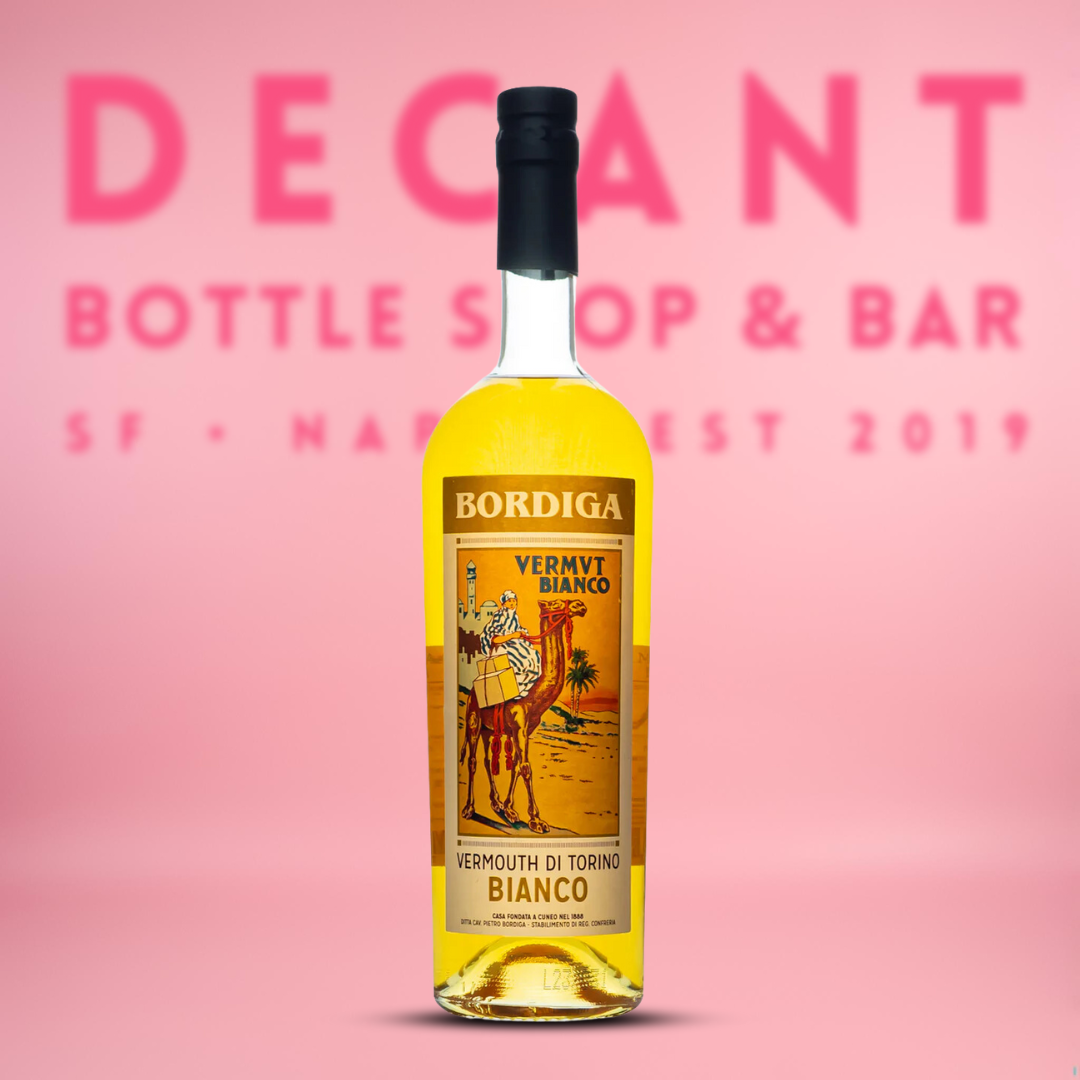
Founded in 1888 by Torino bartender Pietro Bordiga, this historic distillery has remained one of the most authentic producers of Vermouth di Torino. Pietro chose to establish the distillery in Cuneo—close to the Occitan Alps—so he could work with wild-foraged botanicals known for their intensity, purity, and high essential-oil content. Today, the original 1888 Bianco recipe is still in production under the guidance of his great-grandson, making this one of the most historically faithful vermouths in Italy.
PRODUCER: Bordiga Distillery
STYLE: Vermouth di Torino Bianco (Aromatized Wine)
BASE WINES: Trebbiano, Moscato & Cortese from the Langhe
BOTANICALS: Artemisia absinthium (wormwood), European dittany, elderflower, cinchona bark, orange peel (Sicily), anise, vanilla bean (Madagascar), Gentiana acaulis flowers, and additional botanicals sourced from Asia.
All artemisia, elderflower, dittany, and gentiana are wild foraged locally in the Occitan Alps.
PRODUCTION:
Wines are blended and rested for five days. Sugar is added and slowly dissolved over another five days. Each botanical is infused or distilled separately, then blended into the wine solution. The vermouth rests for 40 days, is clarified naturally at cold temperatures, paper-filtered, rested an additional 10 days, then bottled and cellared for 20 days.
ABV: 18%
TASTING NOTES: Fresh, lifted, and beautifully aromatic. Notes of citrus peel, chamomile, elderflower, vanilla, alpine herbs, baking spice, and a subtle bitter edge from gentian and dittany. The palate is bright and balanced with refreshing acidity—allowing the botanicals to shine with clarity and length.
SERVING / COCKTAIL USE: Extremely versatile in classic cocktails. Ideal in a White Negroni, Puritan, or Gibson; also excellent with gin, whisky, or Calvados.
___________________________________________
Bottle Club Notes, January 2021:
When you spend your life operating one of Turin’s most famous bars, you probably have a pretty good idea of what you need to build a great cocktail. This is what Pietro Bordiga had in mind when he decided to establish Distillery Bordiga near Italy’s mountainous northwestern border in the late nineteenth century. With his intimate knowledge of the area’s native botanicals, essential oils and wild plants, Pietro sought to create a line of vermouths and amari that were closely reflective of the local Occitan Alps’ flora and fauna. Today, Bordiga products are easily some of SF bartenders’ favorite go-to’s when building low-ABV cocktails that pack elegance and complexity.
What is vermouth? Vermouth is an 'aromatized wine’— wine that has been infused with herbs and blended with a proportion of neutral spirit. The word ‘vermouth’ is a corruption of the German wermut, for the bitter herb wormwood which is still part of the botanical base of vermouth. The original classic areas for the production of vermouth were in Chambéry in France, and in Piedmont, south of Turin, both part of the historic Duchy of Savoy.
This Bianco di Bordiga has a touch of sweetness to it, making it great for mixing into a cocktail or splashing in with some soda and a citrus peel. The base is made from a blend of Moscato and other local white grapes. Over 30 different botanicals are hand-harvested from local mountains during their peak growing seasons, then dried or preserved to use during the distillation process. The botanicals are infused individually into the triple-distilled spirit, not all together, because different botanicals have different requirements for the best extraction of essential oils. When the extractions are finished, the infusions are added to the base wine and the mixture is left for 10 days before the sugar (Italian or French beet sugar) is dosed, then left for 5-6 days before being cold stabilized (this process was originally done by moving the tanks outside during the snowy Piedmontese winter, but now done in a refrigerated tank). After another few days of resting, the Vermouth is bottled; after another month it’s ready to drink.
It’s a time-consuming and laborious process that generates one of the world’s best Vermouths!
Join our Mailing List
Land Acknowledgement
We acknowledge that we are on the unceded ancestral homelands of the Ramaytush Ohlone (the original inhabitants of the San Francisco Peninsula) and the Wappo & Miwok (the original inhabitants of Napa County).